
What Is a Cafe Racer? Meaning, History and the Features That Define One
The references listed below support the regulatory, safety, and manufacturer statements in this guide. Any dollar figure is an editorial planning estimate based on typical scope, not a quote and not taken from those references, unless a current official price is explicitly cited at that point in the text. Confirm fitment, safety, legality, availability, and current pricing for your exact vehicle before you buy or commission work.
A cafe racer is a road motorcycle stripped down and set up for speed and handling, styled after the road-racing bikes of 1950s and 1960s Britain. The usual signs are low handlebars, rear-set footpegs, a long tank that flows into a short single seat (often with a tail cowl), minimal bodywork and a round headlight. The rider leans forward, more like a racing bike than a cruiser.
Today the term covers three different things: classic motorcycles converted in that style, new factory motorcycles sold as cafe racers, and one-off bikes commissioned from a builder. This guide explains the style. Our model guides, cost guide and builder directory cover building or buying one.
Where The Name Comes From
The style grew out of British motorcycle culture after the Second World War. London Museum describes the young riders who gathered at transport cafes such as the Ace Cafe on London's North Circular Road, which opened in 1938:
The motorcycles built for that life came to be called cafe racers, after the cafes where the riders met. The Ace Cafe closed in 1969 and fully reopened in 2001.
The Features That Define A Cafe Racer
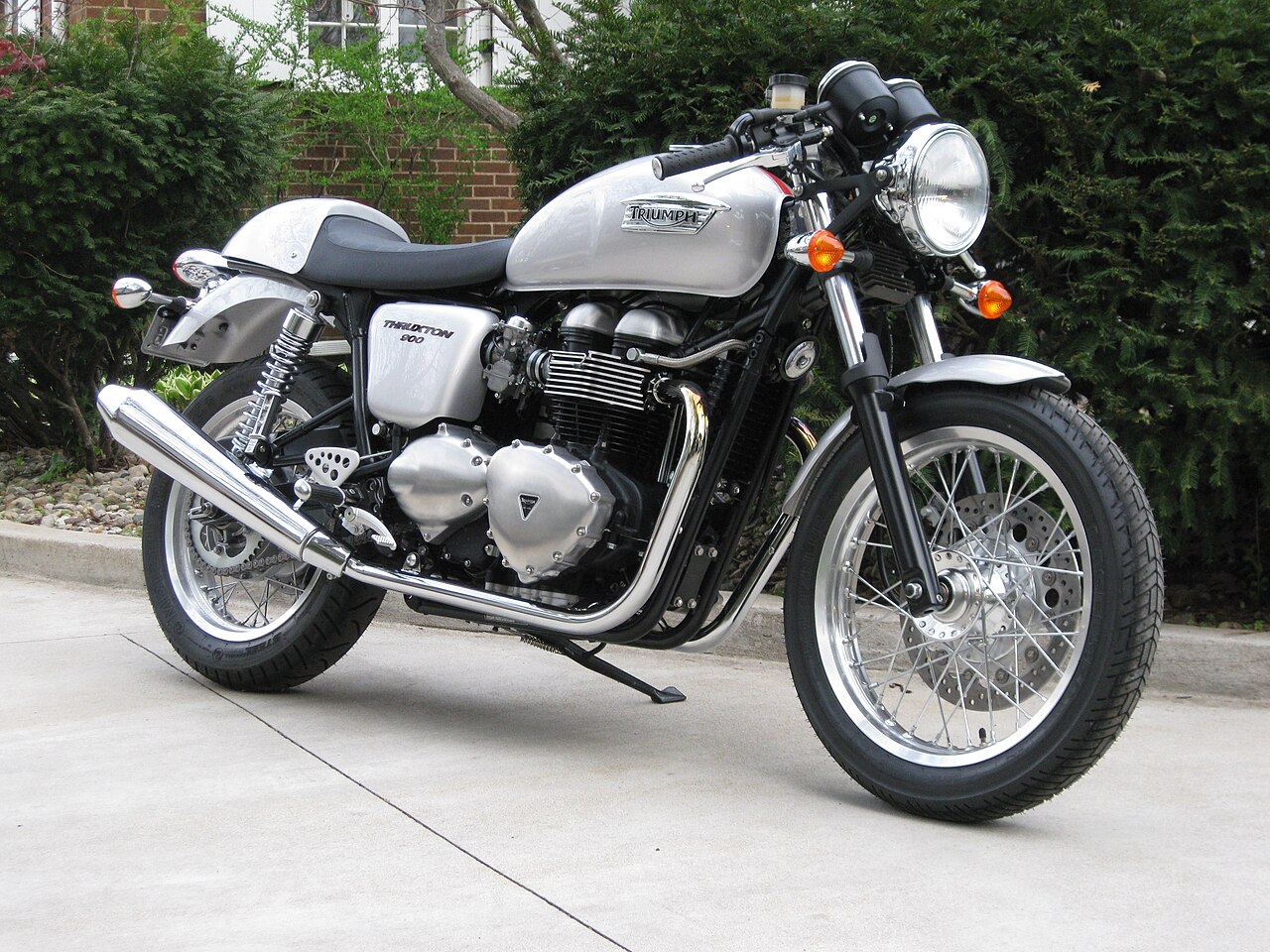
A 2008 Triumph Thruxton 900, a factory motorcycle built in the cafe racer style. The solo-seat cowl, low bars and long tank-to-seat line are visible from this angle.
2008 Triumph Thruxton 900 by Wikikensei · CC BY 3.0. Resized by Wikimedia; no crop or other editorial edits.

There is no official specification, but Cycle World's summary matches the common definition. Purists want a 1960s British single or twin, stripped and tuned for performance, with clip-on or clubman bars, a flat solo seat, rearward foot controls, minimal bodywork, a single round headlight and spoked wheels. Most modern builders treat that as a starting point rather than a rule.
| Feature | What it looks like | Why it is there |
|---|---|---|
| Low handlebars | Clip-ons fitted to the fork tubes, or dropped clubman bars | Puts the rider's weight forward, like a racing bike |
| Rear-set foot controls | Footpegs and levers moved back and up | Matches the forward riding position and adds ground clearance |
| Tank-to-seat line | A long tank and a short, flat seat forming one horizontal line | The signature silhouette from the side |
| Solo seat and cowl | A single seat with a hump or tail cowl | Saves weight; the cowl is a styling element |
| Minimal bodywork | Fenders trimmed, extras removed, sometimes a small fairing | Reduces weight and gives the stripped-back look |
| Round headlight and simple gauges | One headlight and few instruments | Part of the period racing look |
The cafe racer vs bobber vs scrambler guide compares these features with the two other common custom styles, with photographs of each.
Factory, Converted Or Commissioned
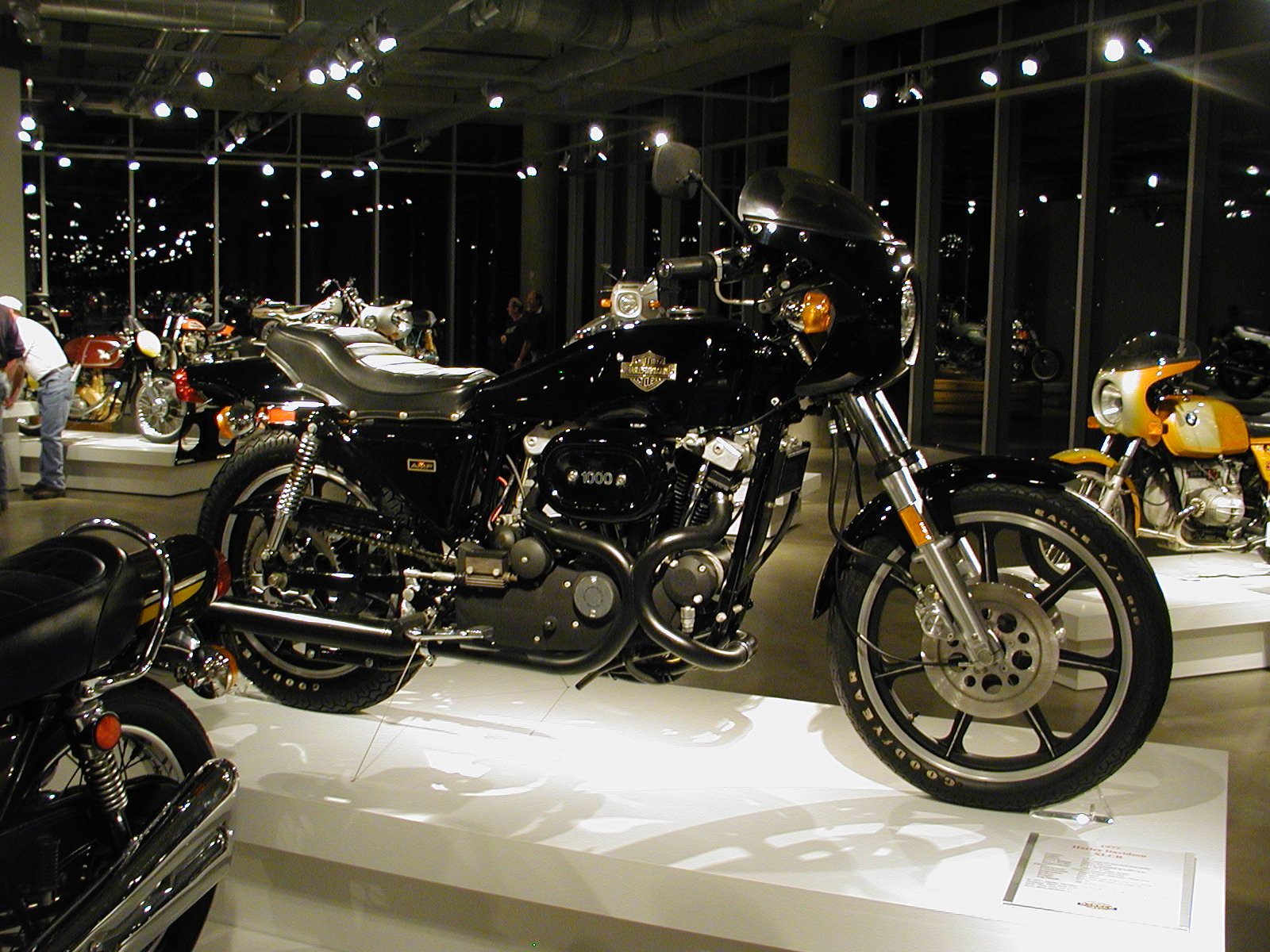
A 1977 Harley-Davidson XLCR at the Barber museum, photographed by Mike Schinkel. Harley built the XLCR as a factory cafe racer on its Sportster platform for 1977 and 1978.
1977 Harley Davidson XLCR 01 by Mike Schinkel · CC BY 2.0. Uncropped; no editorial edits.

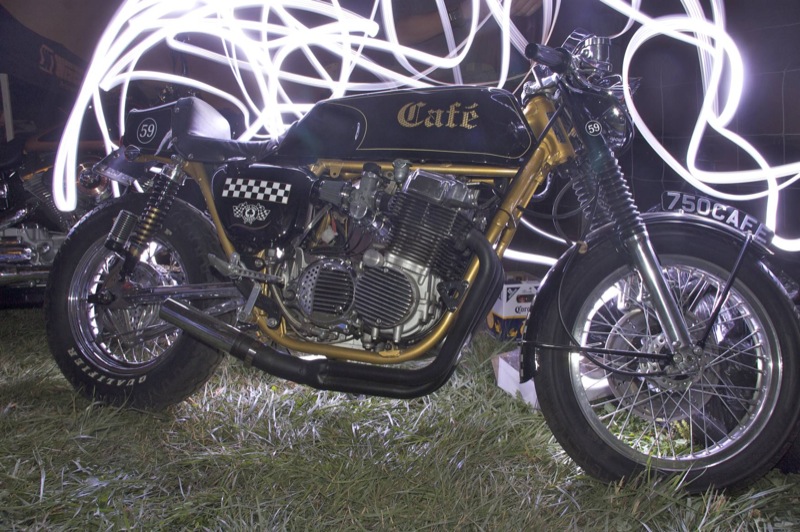
A photographed Honda CB750 cafe racer, an example of the donor-conversion route. The source does not identify its builder or specification.
Honda CB750 Cafe Racer 59 by Tristan Brand · CC BY 2.0. Uncropped; no editorial edits.

Factory cafe racers are built that way by the manufacturer. An early example is the Harley-Davidson XLCR. The National Motorcycle Museum says Willie G. Davidson designed it on the Sportster platform for 1977 and 1978, with flat bars, rear-set footpegs and cast wheels taken from period road racers. It never caught on with most Harley customers and later became collectible. Current factory options are compared in best cafe racer motorcycles.
Converted cafe racers start as an ordinary road motorcycle. The bars, seat, foot controls, lighting and bodywork are changed, and often the suspension and engine too. Classic donors such as the Honda CB750 and BMW Airhead twins are popular, as are modern retro bikes.
Commissioned cafe racers are one-off bikes built by a shop to a customer's brief, from a donor the customer supplies or the shop sources. Compare builders in the cafe racer builders guide.
Is A Cafe Racer Comfortable? Is It A Good First Bike?
A traditional cafe racer is built for short, fast rides, not comfort. Low bars and rear-set pegs put weight on your wrists and fold your knees, and a solo seat leaves no room for a passenger. Some modern factory cafe racers and conversions use higher bars or milder rear-sets to make the position easier.
A cafe racer can be a reasonable first bike if the engine size and riding position suit you. Try the riding position before you buy or convert, and start with a manageable engine. The beginner and budget cafe racer guide and best motorcycles to customize for beginners cover smaller and simpler options.
Cafe Racer Model Guides
Each guide covers factory variants, donor generations, documented custom builds and fitment checks for one platform: