
BMW Airhead Cafe Racer Guide: R65, R80 and R100 Donors and Builds
The references listed below support the regulatory, safety, and manufacturer statements in this guide. Any dollar figure is an editorial planning estimate based on typical scope, not a quote and not taken from those references, unless a current official price is explicitly cited at that point in the text. Confirm fitment, safety, legality, availability, and current pricing for your exact vehicle before you buy or commission work.
A BMW cafe racer project starts with the exact donor, not just the R65, R80 or R100 badge. BMW's own archive separates earlier models from later Monolever and Paralever versions. Their different chassis and equipment make model identification the first useful step before choosing a seat, wheels, suspension or controls.
Searches for BMW cafe racers also return K-series customs and modern R nineT builds. This guide focuses on the older Airhead boxer family. Use the separate BMW R nineT build guide for that newer platform, or find builders with Airhead experience for a vintage project.
BMW Airhead Build Inspiration
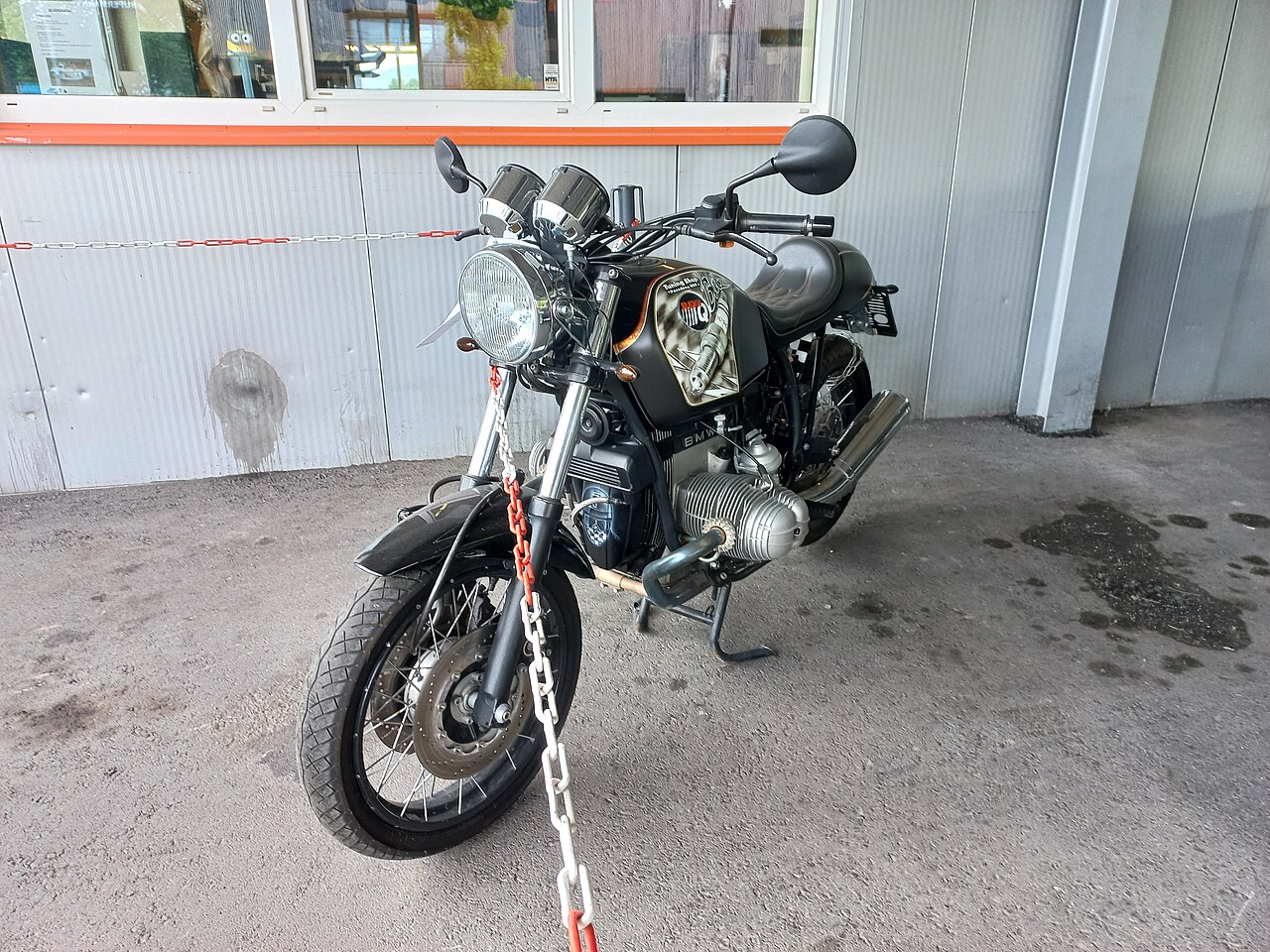
R100R Mystic custom photographed in 2022, identified by the photographer as a 1995 motorcycle. Its builder and components are unrecorded; the projects below feature different bikes.
BMW R100R Mystic Cafe Racer by Asurnipal · CC BY-SA 4.0. Resized; no crop or other editorial edits.

Use the photograph to describe the look you want: tank artwork, seat shape, exposed engine and cockpit layout. A photograph can establish those visible choices, but it cannot establish the condition of the donor, hidden fabrication or the compatibility of a parts list. Ask a prospective builder to show equivalent detail on a bike they have completed.
R65, R80 And R100: Compare The Exact Donor
These are selected factory models and production periods recorded by BMW Group Classic, not a complete list of every Airhead variant. Production dates can differ from a bike's registration year or its model year in a particular market. Check the motorcycle's identity and fitted equipment before ordering parts.
| Factory model | Production | Important distinction |
|---|---|---|
| R65 | 1978 to 1985 | Earlier 649.6 cc R65; identify it separately from the later Monolever. |
| R65 Monolever | 1985 to 1993 | 649.6 cc engine combined with the later single swing-arm chassis concept. |
| R80/7 | 1977 to 1984 | 797.5 cc; BMW records brake and wheel changes during production. |
| R80, Monolever | 1984 to 1992 | Later 797.5 cc road model with a Monolever rear arrangement. |
| R100RS, early chassis | 1976 to 1984 | 980 cc; the earlier twin swing-arm RS in BMW's archive. |
| R100R | 1991 to 1996 | 980 cc roadster using a Paralever rear swing arm. |
The practical lesson is to record the full model designation and chassis type alongside the year. A part advertised for an R80 still needs an explicit fitment check against your particular R80. The archive describes the original motorcycle; previous owners may have changed the wheels, forks, brakes, engine or rear frame.
Two Documented Airhead Builds
The following projects provide attributable examples of completed work. Their original galleries show the actual motorcycles. They demonstrate the scope of those projects, rather than a universal conversion recipe or current commission availability.
Cafe Rider Project Zero 20: 1985 R80
Cafe Rider describes an R80 that arrived in boxes and received an engine rebuild, refurbished carburetors, Lossa Engineering mufflers and a fabricated detachable rear subframe. Its specification also identifies a Motogadget control unit, instrument, switches and indicators. The shop designed the rear frame for a solo rider while retaining a possible later two-seat arrangement. Project Zero 20 build story and photographs.
Use this example to discuss how the seat, rear frame, passenger requirement and electrical packaging interact. Ask your builder to explain those decisions together before approving the bodywork. The published build is an example from Dubai, not evidence of a US shop's intake or a quoted price.
Roughchild's White Commission: 1977 R100RS
Roughchild documents frame repair and bracing, a custom rear frame, Öhlins FGRT forks with a custom triple tree, Öhlins rear shocks and Brembo GP4 calipers. It also describes an engine rebuild, revised ignition and charging, tuned Mikuni carburetors and a retained factory airbox. The builder calls the finished motorcycle a street scrambler. White Commission specification and gallery.
This is a useful comparison for the engineering behind a complete Airhead commission, even if your preferred finish is a cafe racer. Ask which work is driven by the donor's condition and which work follows from your design. Do not copy a suspension or brake combination from the feature without an assessment of your own motorcycle.
Inspect The Donor Before Designing Around It
Have an Airhead specialist assess the complete motorcycle while its existing systems can still be tested. Ask for a written condition report covering the engine, fuel system, charging and starting systems, transmission and final drive, bearings, suspension, brakes, wheels and tires. Include known modifications and evidence of previous repairs.
Request separate findings for work needed to establish a sound baseline and work that is optional for the style you want. Ask what can be determined during the initial inspection, what requires disassembly and when you will receive a revised estimate. This is more useful than assuming that every running donor needs the same list of new parts.
For a complete, largely original motorcycle, have the shop describe a reversible version of the design as well. You can then decide which changes justify altering original bodywork or frame details, and record which removed parts should be returned to you.
Plan Bodywork And Fitment As A Complete Layout
Mock up the tank, seat, handlebars and foot controls together. Tell the builder your intended trips, riding position and passenger requirement. Ask it to demonstrate steering clearance, control operation and space for suspension movement before finish work begins.
A Monolever label does not establish Paralever compatibility. For any rear-frame or seat kit, obtain the supplier's exact model and year fitment, mounting requirements, load limitations and list of additional parts. Ask who checks alignment and clearance, and whether the quoted work includes fabrication, finishing and assembly.
Use the same approach for wheel or fork changes: request a complete description of the affected bearings, brakes, controls and mounting hardware. A collection of separately advertised parts is not evidence that the assembled motorcycle has been checked.
Keep The Electrical Work Serviceable
Ask where the battery, control unit, connectors and protection devices will sit, how they can be reached for service, and which original charging and ignition components will remain. Include a wiring record and functional checks in the handover scope. The two documented projects above use different arrangements; neither supplies a complete electrical design for every Airhead.
Settle instruments, lights, switchgear and cable routing during the mock-up. Confirm applicable requirements with the shop for the place where you will register and use the bike, rather than treating a photographed build from another country as an approval for your project.
Budget The Work Your Bike Actually Needs
The sources above do not establish a representative US price for an R65, R80 or R100 conversion. Request a staged quote with separate lines for the donor, diagnosis and repairs, chassis work, purchased parts, wiring, paint, upholstery and final assembly. Include transport and any applicable charges the shop has not already included.
Ask which stages are fixed-price and which depend on hours or discoveries during disassembly. Agree on approval points for additional work and a reporting schedule. Use the motorcycle paint price guide when comparing finishing scope, keeping its shop-specific examples separate from the total build budget.
Prepare An Airhead Build Brief
Record the full model, production details, existing chassis configuration, known faults and modifications, and photographs of the actual donor. Add your preferred riding position, passenger needs, style references, budget ceiling and timing in the build brief creator.
Compare the existing profiles for Roughchild, Boxr Moto and Boxer Metal, or search for Airhead experience. Ask each shop which relevant projects it completed, who performs the specialist work, and whether it is accepting your type of commission. A record of completed builds and a current booking are separate pieces of information.
Sources Checked
Reviewed September 10, 2026. Model facts come from BMW's archive; project specifications are attributed to their builders. Photographs are credited at the image. No project price or independent performance test is inferred from these sources.