
BMW R nineT Cafe Racer Guide: Models, Parts and Custom Builds
This editorial guide is compiled from the references listed below. Prices are planning ranges unless a current official price is explicitly cited; confirm fitment, safety, legality, and availability for your exact vehicle before purchase.
A BMW R nineT cafe racer can begin with a factory Racer, a roadster with reversible changes, or a commissioned custom. Choose that route before ordering parts. The original R nineT family includes different forks, wheels, frame arrangements and electronic equipment; the later R 12 nineT introduces another platform.
This guide compares the factory variants, shows two documented custom projects and uses specific supplier listings to explain fitment. Sources were reviewed September 15, 2026. Product descriptions are manufacturer statements, and we have not installed or road-tested the parts.
Choose the R nineT Model
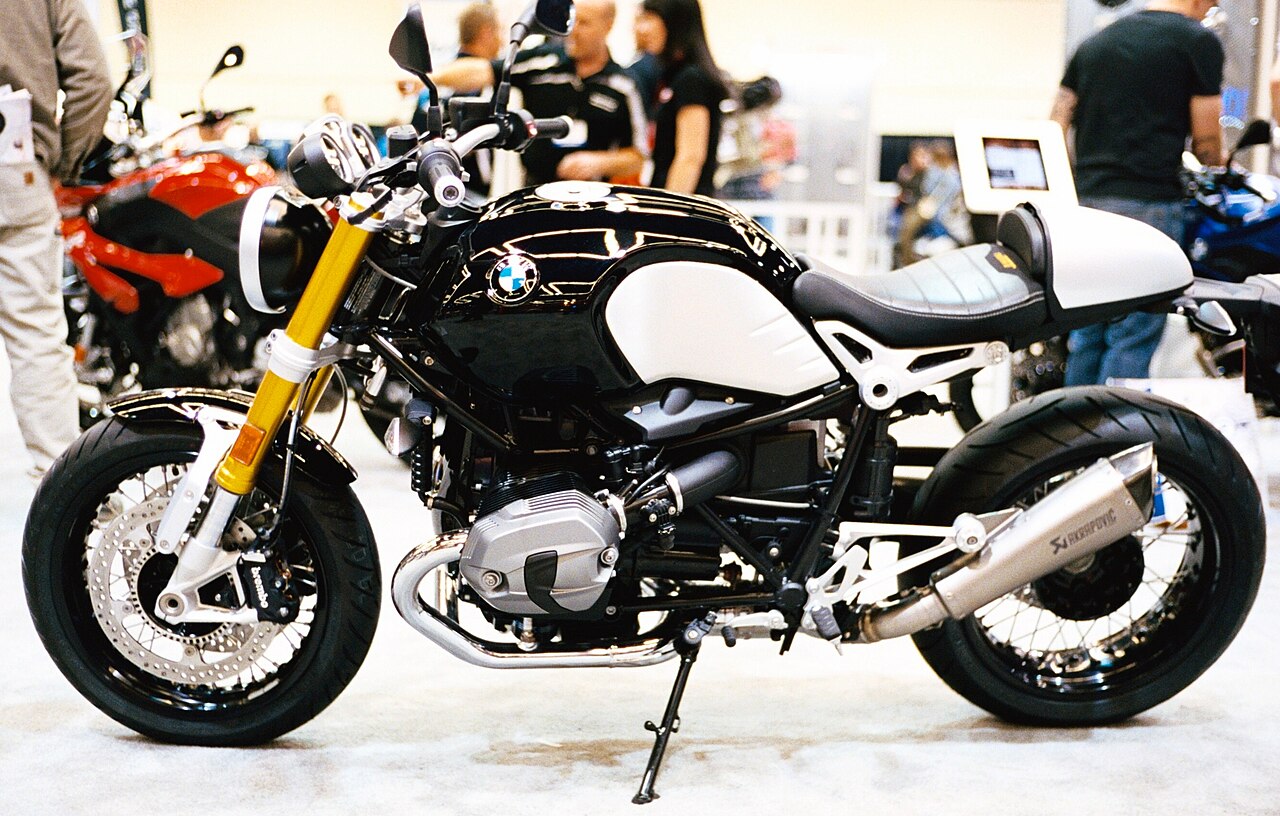
A BMW R nineT with accessories at the Seattle International Motorcycle Show in November 2014. This earlier-platform reference is separate from the Rough Crafts and Wunderlich projects and does not depict the later R 12 nineT.
BMW R nineT left.JPG by Dennis Bratland · CC BY-SA 4.0. Wikimedia's resized 1280 × 816 version; no crop or other editorial edits. This version remains under CC BY-SA 4.0.

BMW's original R nineT uses a 1,170 cc air/oil-cooled boxer and shaft drive. It is a modern custom platform with its own service and electrical requirements. For older R-series donors, use the separate BMW Airhead guide.
| Factory model | Documented starting equipment | Cafe-racer planning implication |
|---|---|---|
| Original R nineT roadster | Upside-down fork and 17-inch wire-spoke wheels at launch; fully adjustable fork in the 2017 update | Specify the year before choosing controls, suspension or tail parts |
| R nineT Pure | Conventional fork and 17-inch cast wheels at launch; wire-spoke wheels were optional | A useful roadster layout, but original-model fork parts are not automatically compatible |
| R nineT Racer | Factory half-fairing, hump seat, low bars and rear-set footrests; conventional fork and 17-inch cast wheels at launch | Compare its existing riding position with the cost and scope of converting a roadster |
| R nineT Scrambler | Conventional fork, 19-inch front wheel and raised exhaust; cast wheels at launch with wire-spoke wheels optional | Wheel, geometry and exhaust changes need a coordinated plan |
| R nineT Urban G/S | Conventional fork, 19-inch front wheel and GS-inspired bodywork; cast wheels at launch with wire-spoke wheels optional | Its appearance does not make it an older R80 G/S or give it the roadster's exact component fit |
| R 12 nineT | Successor with a new main frame and an airbox beneath the seat | Order against an R 12 nineT application; shared “nineT” wording does not establish fit |
These are factory reference points, not a statement that every used example still has its original equipment. Check the VIN, market, option list, fitted wheels and suspension, and any previous conversion. BMW's original announcement, Pure/Racer release, Scrambler release and 2017 roadster/Urban G/S release document the distinctions.
Check the Year as Well as the Variant
Original Roadster and the 2017 Update
The first R nineT was announced in 2013. BMW's 2017 update introduced a fully adjustable upside-down fork and revised chassis geometry. A catalog that separates 2014–2016 and 2017-onward applications is therefore asking a meaningful question, even when the motorcycles look similar.
The frame arrangements also differ. BMW describes a removable end piece and passenger frame on the original roadster, while the Pure, Racer and Urban G/S use an integrated end piece within their different frame arrangement. A removable passenger structure does not mean that every shortened tail or seat assembly fits every variant.
2021 Family Update
BMW's 2021 model announcement covers the R nineT, Pure, Scrambler and Urban G/S. It documents the Euro 5 engine revision, new cylinder heads, LED lighting, Rain and Road modes, ABS Pro with Dynamic Brake Control, and an updated rear shock. Market-specific equipment still needs checking on the actual motorcycle.
This matters when changing the headlight, instrument, controls, exhaust or wiring. Ask which warnings, modes and other functions the proposed parts retain. Older installation photographs do not demonstrate compatibility with the later electronic package.
R 12 nineT: A Separate Parts Application
BMW's November 2023 R 12 nineT announcement describes a new one-piece tubular main frame with a bolted rear frame, a relocated airbox and revised packaging. Its 1,170 cc boxer lineage does not establish interchangeability for tanks, seats, exhausts, brackets or electrical parts with the earlier R nineT.
Two Documented R nineT Custom Builds
Rough Crafts Bavarian Fistfighter
Rough Crafts published the Bavarian Fistfighter on November 8, 2015. The builder's account describes a BMW-supported R nineT project with a custom tank and solo-seat shape, one-off machined wheels and rotors, a Gears Racing rear shock, and changed controls, intake and exhaust. It credits OneHandMade for bodywork and Air Runner Custom Paint for the finish.
The useful lesson is the coordinated design: the tank, seat, wheels and finish were developed as a whole. The published bike also used race slicks. A road-going brief needs its own suitable tires and equipment assessment, and the project account supplies neither a current complete kit nor a representative build price.
Wunderlich R nineT Cafe Racer
Wunderlich's white cafe-racer project combines clip-ons, a single seat and a raised exhaust with changes to the fork, rear shock and Paralever strut. The company's description makes clear that the cafe silhouette was accompanied by suspension work.
Use its project photographs to discuss rider position and overall proportions with a shop. Wunderlich's handling claims are the supplier's assessment; we have not independently tested the motorcycle. The project page does not identify a complete conversion package suitable for every R nineT year and variant.
The linked publishers provide photographs of those builds. The credited reference image above depicts a separate R nineT at the Seattle motorcycle show in November 2014, with accessories visible; it is not either named project.
Parts Fitment: Two Specific Examples
Rizoma MA050 Clip-On Kit
Rizoma's MA050 listing for the R nineT 1200, 2017–2020 specifies a 55 mm fork clamping diameter. It says the bars are supplied without pre-drilled control holes and recommends a specialist for mounting and control repositioning.
The selected application is the starting point. Confirm the fitted fork, clamp position, heated grips, bar ends, master-cylinder angle, hose length, switch wiring and tank clearance. Read the approval document for the exact application; the page notes that some approvals remain in progress. Its estimated assembly time is not a quote for the complete cockpit conversion, inspection and road test.
Unit Garage nineT/7 Vision Tank, Code 2902V
Unit Garage's 2902V tank listing names the Roadster, Pure, Racer, Scrambler and Urban G/S in its compatibility list. The maker describes a painted nylon tank that retains the original fuel pump, cap and carbon canister, with mounting supports supplied, an 18.5-liter capacity and TÜV approval.
It displays a price of €2,064 plus VAT at this review. That is a supplier component price in euros, not an installed US build cost. Confirm the exact year and market, seat pairing, fuel-system connections, approval document, shipping and tax treatment before ordering. The visible compatibility list does not establish an R 12 nineT application.
This listing also illustrates why a replacement tank needs more detail than material and appearance. Identify which original systems transfer, what the kit supplies, and who will assemble and leak-check it. Do not assume a generic tank or seat from another BMW family is a substitute.
Plan the Conversion Around the Rider
Start with a documented service baseline. Have the shop assess the brakes, tires, steering, suspension, charging, diagnostic faults and final-drive condition before quoting styling work. Keep donor repairs separate so they do not consume an apparently complete parts budget later.
Mock up the seat, bars and foot controls together, with the intended rider and any passenger requirements. A cafe-racer stance still needs usable steering lock, clear mirrors, comfortable reach and enough room for the rider's hands. At full lock, controls must work freely and hoses and wiring must not stretch, rub or become trapped.
Choose the tail around its actual mountings and load rating. Record which frame pieces, passenger pegs, seat locks, lights and plate supports stay. Ask the supplier to distinguish reversible removal from cutting or welding. A single-seat appearance is not evidence that a tail is designed to carry a passenger.
For suspension or wheel changes, ask the shop to assess geometry, tire and fender clearance, brake fitment, sensor operation and the shaft-drive/Paralever assembly together. Different wheel diameters or a longer shock require more than matching a photograph. Retain access to routine service points after fitting the bodywork.
Keep Electrical and Exhaust Work Specific
A modern BMW's electrical functions need a documented integration plan. A standalone accessory controller does not automatically replace the original engine management, immobilizer, ABS or instrument functions. Ask which original modules remain, which adapters are used, and which diagnostic checks will be recorded at handover.
Match the exhaust to the model, emissions version, catalyst, sensors, luggage and passenger arrangement. Follow the actual exhaust maker's requirements before specifying tuning. There is no basis for assuming every slip-on needs the same ECU flash or that a dealer can perform a generic custom remap.
For a US road bike, EPA's tampering guidance is relevant to emissions changes. Obtain the part maker's application and road-use documentation, then confirm local lighting, noise and inspection requirements with the installer. Keep those decisions in the quote before fabrication starts.
Build an Itemized R nineT Budget
Neither documented custom establishes a typical US conversion price or completion time. Compare written proposals based on the same donor and outcome. The tank example above shows how one visible component can have substantial cost before fitting or finishing the rest of the motorcycle.
| Quote line | What the proposal should identify |
|---|---|
| Donor and maintenance | Inspection findings, repairs, tires, brakes and service work |
| Parts | Exact codes, year/variant applications, brackets, hardware, shipping and taxes |
| Trial assembly | Seat/bar/foot-control position, body fit, service access and clearance checks |
| Installation and integration | Mechanical work, wiring, diagnostics, fabrication and any required tuning |
| Finish | Preparation, paint, graphics, upholstery and credited outside specialists |
| Handover | Inspection, testing, parts and wiring records, warranty scope and follow-up checks |
Ask which dates depend on supplier delivery, which parts are made to order, and how changes to scope will be priced. Agree who is responsible for customer-supplied parts that do not fit. The motorcycle paint-cost guide can help define a separate finish allowance using dated provider examples.
Prepare a Brief for an R nineT Builder
Use the BMW R nineT project brief to record the VIN/model year, variant, existing modifications, intended roads, rider position, passenger needs, reference builds, parts shortlist and total budget. Include photographs of the motorcycle as it stands today.
The R nineT builder directory links to profiles with recorded platform evidence. Read what each shop actually contributed, including any specialist paint or fabrication work, then request a comparable project and a written scope. Profile evidence is dated; a directory match does not establish current intake or experience with your exact kit.
Frequently Asked Questions
Is the R nineT Pure fitted with wire-spoke wheels as standard?
BMW's launch specification gives the Pure cast wheels, with wire-spoke wheels optional. Inspect the actual bike and its option record rather than identifying a variant from wheels alone.
Is buying a Racer easier than converting a roadster?
The Racer already supplies the factory half-fairing and cafe riding position. Compare the actual motorcycle, comfort and condition with an itemized roadster conversion proposal. A different custom look may still require extensive work.
Will R nineT parts fit the R 12 nineT?
Use a specific R 12 nineT application or written manufacturer confirmation. BMW documents substantial frame, airbox and packaging changes on the successor.
Does the removable rear structure make every tail conversion simple?
No. Variant-specific frame arrangements, seat support, passenger equipment, wiring, lighting and tire clearance still determine the work. Have the supplier identify the exact components removed or replaced.
Sources Checked
Related CustomAutoMoto Pages
Related BMW Custom
BMW R1200R by Lazareth
The R nineT was designed with customization in mind, but Lazareth's older R1200R scrambler shows a deeper structural transformation: new tubular chassis, R6 front-end conversion, Twinduro tires, and the boxer engine kept as the visual anchor.
View the R1200R profile