
Kawasaki Z900RS Cafe Guide: Models, Builds and Conversion Planning
The references listed below support the regulatory, safety, and manufacturer statements in this guide. Any dollar figure is an editorial planning estimate based on typical scope, not a quote and not taken from those references, unless a current official price is explicitly cited at that point in the text. Confirm fitment, safety, legality, availability, and current pricing for your exact vehicle before you buy or commission work.
The Kawasaki Z900RS Cafe provides a factory cowl, lower handlebar and cafe-style seat. A standard Z900RS offers another starting point when you want a different cockpit or body shape, while the SE adds a distinct brake and suspension package. Compare the actual models before buying a motorcycle to convert.
The 2026 update also makes model year important. Use the factory comparison, documented custom projects and parts example below to prepare a Z900RS project brief, then browse builders listing Kawasaki experience. That search covers broader brand experience; ask for a completed project on your Z900RS generation.
Z900RS Cafe, Standard or SE?
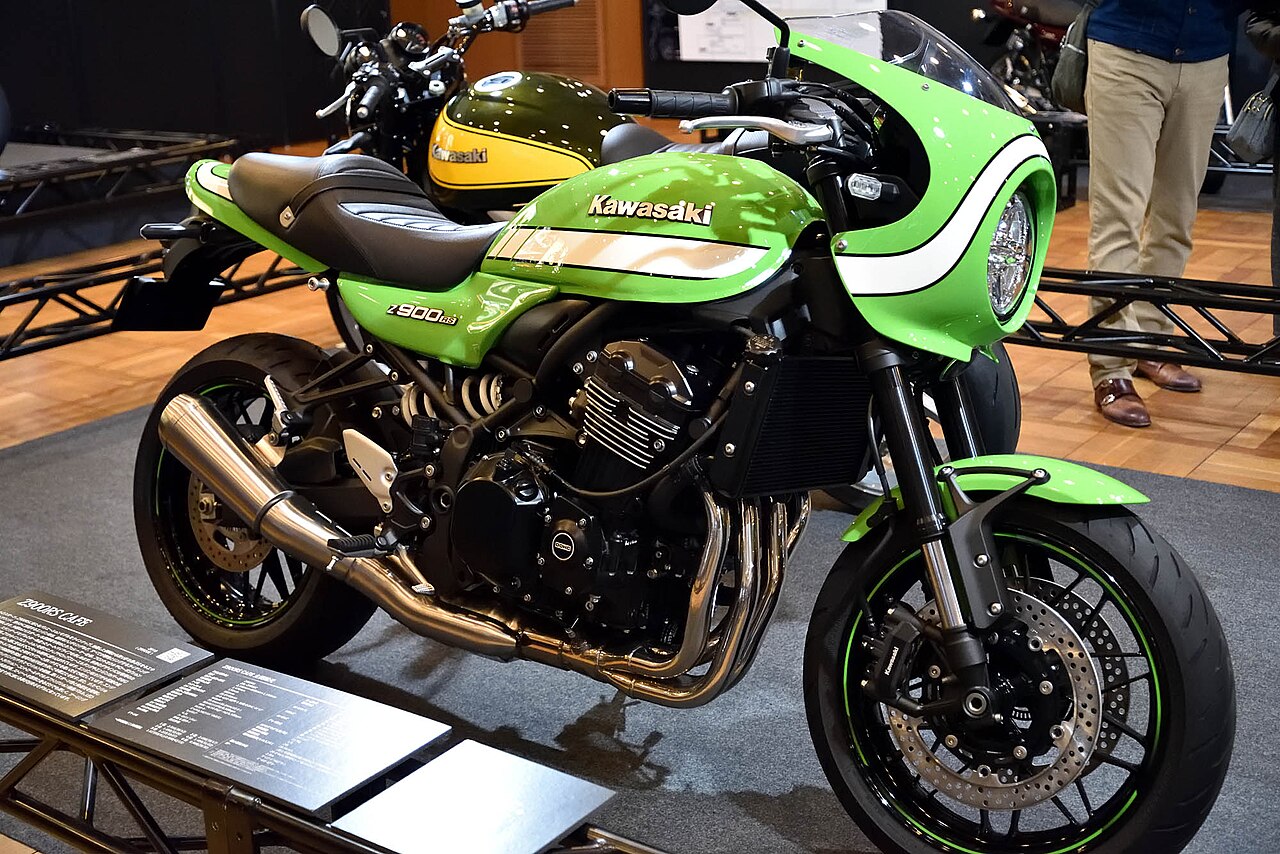
A 2018 Kawasaki Z900RS Cafe photographed at Kawasaki Good Times World in Kobe. This earlier-model reference is separate from the 2026 models and the Doremi and Deus projects discussed below.
2018 Kawasaki Z900RS Cafe by Rikita · CC BY-SA 4.0. Resized by Wikimedia; no crop or other editorial edits.

Kawasaki's US model comparison lists the following 2026 variants. The Cafe's styling package and the SE's equipment package answer different questions; check which features matter to your own plan.
| 2026 US model | Factory distinction | Base MSRP checked September 14, 2026 |
|---|---|---|
| Z900RS ABS | The standard retro roadster, with the updated electronics package | $12,899 |
| Z900RS CAFE ABS | Front cowl, black drop handlebar, cafe-style seat and brushed exhaust finish | $13,299 |
| Z900RS SE ABS | Brembo M4.32 front brake package and Öhlins S46 rear shock | $14,599 |
The Cafe's listed base MSRP is $400 above the standard model, calculated as $13,299 minus $12,899. That is a factory-price comparison, not the cost of converting a motorcycle you already own. Kawasaki excludes destination, options, taxes, title, license and dealer charges from base MSRP; the dealer sets the actual sale price. Request complete quotes for the specific bikes available to you.
The factory prices are also listed on the standard model page, Cafe page and SE page. They provide a useful benchmark before pricing an entire cowl, seat and control conversion.
Why 2026 Needs Its Own Parts Check
Kawasaki's November 2025 US launch document describes the 2026 family with electronic throttle valves, IMU-supported rider systems, cruise control and a bidirectional quickshifter. The 2026 Cafe specifications retain the 948cc inline-four engine layout and list the updated rider aids.
A supplier's earlier Z900RS product page may not answer every question about the new controls or electronics. Send the exact model year, market and variant when asking about handlebars, switches, rearsets, exhausts or instrument work. Ask the installer to identify the interfaces affected by the proposed change.
The photograph above shows a 2018 Cafe, and the custom projects below originated around the model's launch. Their appearance is useful inspiration, but their parts lists do not establish 2026 compatibility. The similarly named Z900 is also a separate application; do not drop the RS designation from a parts search.
Two Documented Z900RS Custom Directions
Doremi Collection: Z1 Style
Doremi's development account traces its Z900RS work to a Kawasaki-requested demonstration motorcycle for the October 2017 Tokyo Motor Show. The company began with the tail silhouette and subsequently developed tank covers and a steel inner tank to pursue its Z1-inspired shape.
This is a heritage roadster direction, useful when your goal is a coordinated tank, seat and tail rather than the factory Cafe's front cowl. Doremi distinguishes the original show motorcycle from the retail parts developed afterward. Its illustrated machines and later product families should not be treated as one fixed bill of materials. Ask which exact parts, supporting components and finishing work belong in your proposal.
Deus Ex Machina: Stone Tracker
Deus's November 2017 presentation identifies Stone Tracker as a Z900RS project built by its Sydney workshop in collaboration with Kawasaki Australia. The design uses tracker-style front and seat cowls with block-pattern tires. It is a tracker interpretation, rather than a Cafe specification or proof of off-road capability.
Jeremy Tagand's build diary makes a useful practical point: the tail and side covers needed to come apart for access to the components underneath. That gives you a concrete question for a fabricator: how will the finished seat and panels be removed for servicing? The diary documents one build, not a current universal body kit.
Use the source links to view each publisher's project photographs. The licensed factory-model photograph in this guide is a separate motorcycle.
A Cafe Cowl Is an Assembly, Not Just a Painted Panel
Kawasaki's 2026 Cafe cowling parts list identifies model ZR902ETFAL and separates the windshield, part 39154-0374, from the Ebony upper cowling, part 55028-0658-H8. Pads, well nuts, bolts, dampers and washers have their own entries.
Use that list to ask for a complete installation proposal. A used fairing advertised on its own may omit hardware, and a cowling diagram does not establish that every required support is included or that the assembly transfers to a standard Z900RS. Have a dealer or installer compare the relevant diagrams for your exact motorcycle.
For an aftermarket kit, request the same level of detail: supported year and variant, brackets, screen, finish, lighting arrangement, hardware and instructions. Ask whether paint and installation are separate charges. A photograph of a complete supplier demonstration bike does not establish what arrives in the box.
Plan the Changes as One Job
| Work area | Decide before buying | Include in the written scope |
|---|---|---|
| Cowl and instruments | Shape, screen height and display position | Mounting hardware, steering clearance, cable routing and service access |
| Bars, seat and foot controls | Rider reach, posture and passenger use | A fit session and review of the complete control arrangement |
| Seat and tail | Which factory parts stay and how the seat opens | Latch, brackets, lighting mounts and removable panels |
| Paint and finishing | Panel condition, materials, colors and graphics | Preparation, trial assembly, samples and reassembly responsibilities |
| Exhaust and electronics | Exact system, existing modifications and intended use | Supplier application, supporting work and a defined testing scope |
| Suspension and brakes | Current equipment, condition and the rider's needs | Inspection, setup and any proposed component replacement |
Have the shop assess the motorcycle's condition before allocating the budget to appearance. Then review the proposed bars, seat and foot controls together. Choose the shape and position that suit the rider before the fairing brackets and final finish make the arrangement expensive to change.
Agree who coordinates the work if the fabricator, painter and mechanical workshop are different businesses. The fabrication, paint and exhaust directories can help identify the scope to discuss. Their reviewed entries describe supported capabilities; current intake and your exact application still need confirmation.
Compare Complete Quotes
For a bike you already own, begin with inspection, purchased parts and installation work. Add bracket fabrication, controls or wiring, surface preparation, paint, shipping and final assembly. Ask how the workshop will price any changes found during trial fitting.
If you are choosing a donor, compare its purchase price and condition-related work with a complete quote for the factory Cafe. The $400 base-MSRP difference above is only a comparison between two listed new models; it is not a promise that buying either one will save you that amount after dealer charges or used-bike condition are considered.
For a one-off shape such as the documented customs, request design and fabrication stages rather than a generic conversion allowance. Approve the initial design, review the fitted assembly and then approve the finish. Record which original parts should be returned.
Neither project account provides a representative US custom-build price. The motorcycle paint cost guide can help you compare dated finishing examples, while the editable build brief lets you send each shop the same vehicle details, intended use and budget ceiling.
Z900RS Cafe Questions
Is the Cafe the same as the SE?
They are separate 2026 variants. Kawasaki lists the Cafe's cowl, bar and seat package separately from the SE's Brembo brakes and Öhlins rear shock. Compare the actual equipment rather than treating the names as interchangeable upgrades.
Will an earlier Z900RS kit fit a 2026 bike?
Get confirmation of the specific application from the supplier and installer. Check the year, market and variant, especially when the change involves controls or electronics. The historical builds in this guide do not verify compatibility with the 2026 update.
Can I fit the factory Cafe fairing to a standard Z900RS?
Ask for a part-by-part installation plan for the two exact models. The reviewed cowling list shows that the panel and windshield are separate from multiple small components; it is not a complete standard-to-Cafe conversion instruction.
Which builder should I contact?
Start with the motorcycle search for Kawasaki experience. The current directory has no Z900RS-specific entries, so these broader listings are a starting point for inquiries. Ask for a completed project involving your generation and proposed systems, who performs the work and whether the business currently accepts your scope.
Sources Checked
Reviewed September 14, 2026. Prices are dated manufacturer base MSRPs; the $400 difference is an editorial calculation. Factory specifications, parts lists and historical custom projects are attributed separately, with the photograph credited at the image.