Cafe Racer vs Bobber vs Scrambler: Looks, Riding Position and Build Choices
The references listed below support the regulatory, safety, and manufacturer statements in this guide. Any dollar figure is an editorial planning estimate based on typical scope, not a quote and not taken from those references, unless a current official price is explicitly cited at that point in the text. Confirm fitment, safety, legality, availability, and current pricing for your exact vehicle before you buy or commission work.
A cafe racer usually emphasizes a road-racing silhouette: a low cockpit and a defined tank-to-tail line. A bobber emphasizes a stripped-back motorcycle, often with a solo seat and abbreviated bodywork. A scrambler draws on mixed-surface riding, commonly using an upright cockpit and dirt-oriented details.
These are design directions, not fixed engineering specifications. A low seat does not guarantee comfort, a bobber does not have to be a rigid-frame motorcycle, and chunky tires do not establish off-road capability. Choose the riding position and job you need the bike to do before commissioning the look.
Three Styles In Pictures
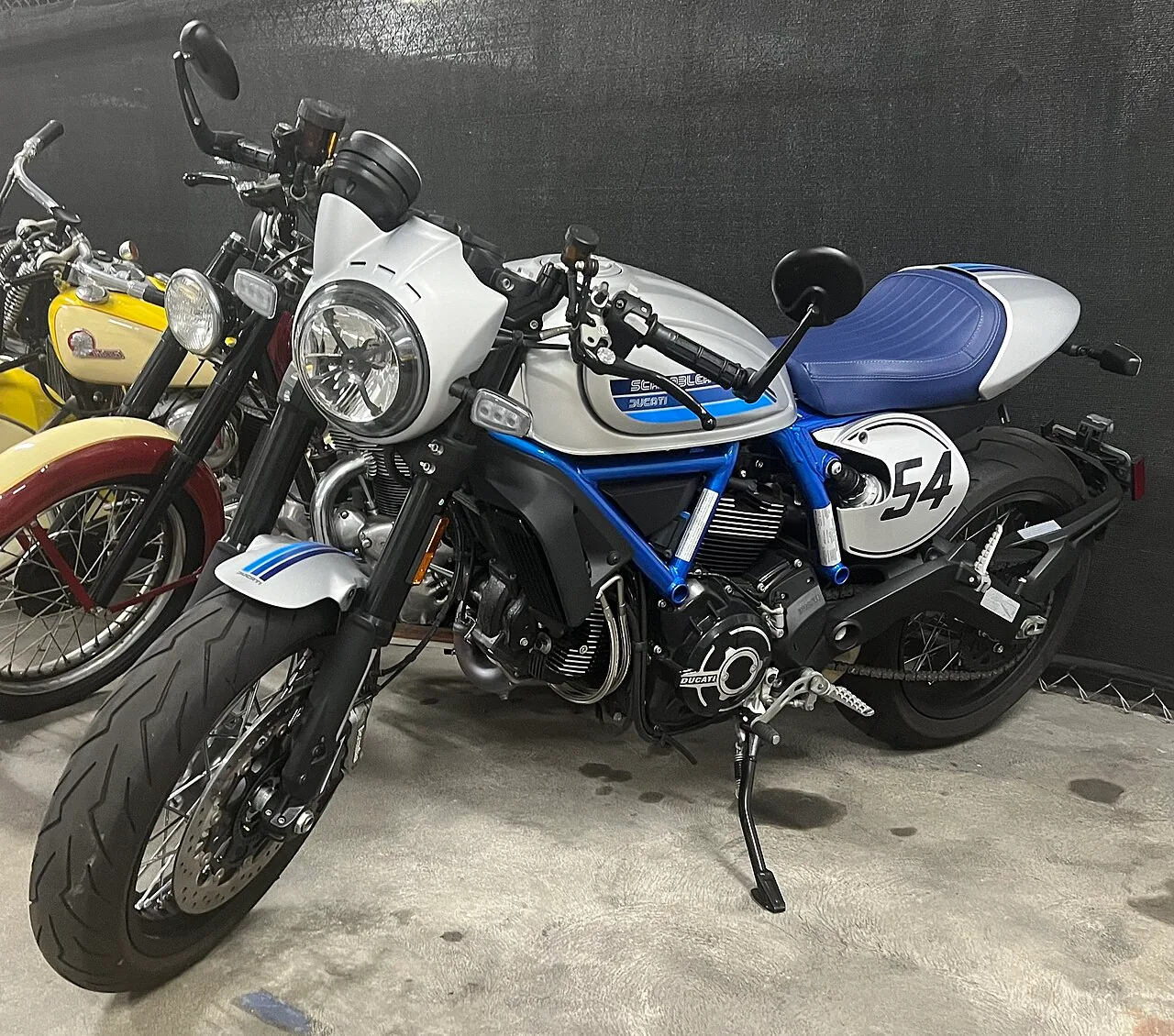
Cafe racer: Ducati Scrambler Café Racer at the Petersen Automotive Museum. The compact cockpit and tank-to-tail profile show its road-racing influence.
Ducati Scrambler Cafe Racer at the Petersen Automotive Museum by TaurusEmerald · CC BY-SA 4.0. Resized by Wikimedia; no crop or other editorial edits.

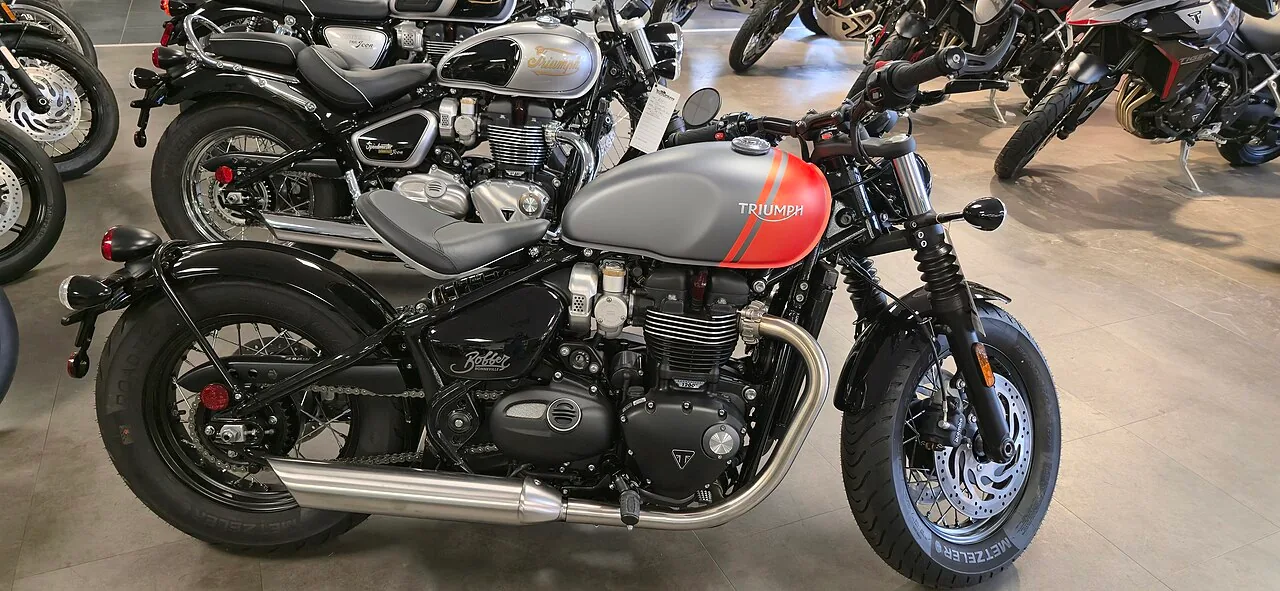
Bobber: a Triumph Bonneville Bobber identified by the photographer as a 2025 model. Notice the separate solo seat and exposed frame below it.
2025 Triumph Bonneville Bobber by PackMecEng · CC0 1.0. Resized by Wikimedia; no crop or other editorial edits.

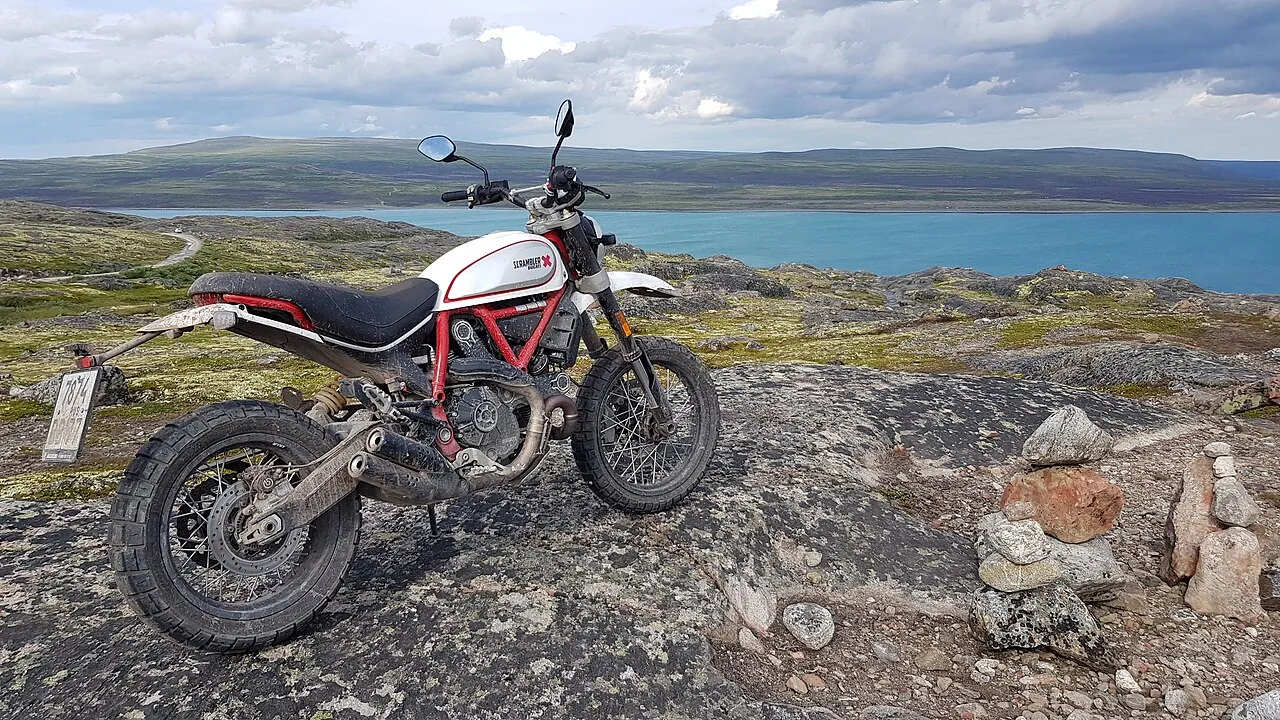
Scrambler: a Ducati Desert Sled photographed in 2019. The upright bars, high front fender and tread pattern illustrate the mixed-surface direction.
Ducati Scrambler Desert Sled, photographed in 2019 by Artem Lepesin · CC BY-SA 4.0. Resized by Wikimedia; no crop or other editorial edits.

These separately credited reference bikes show the visual differences. The photographs are not a scale comparison or a road test, and they do not show the named Rough Crafts projects below. The Ducati Café Racer also illustrates an important naming wrinkle: a motorcycle in the Scrambler product family can be a cafe racer.
Cafe Racer Vs Bobber Vs Scrambler At A Glance
| Question | Cafe racer | Bobber | Scrambler |
|---|---|---|---|
| What is the visual priority? | A road-racer line through tank, seat and tail; often low bars or a small fairing | An exposed engine and frame, compact bodywork and often a floating-looking solo seat | An upright stance, practical-looking cockpit and dirt-riding cues |
| What changes the riding position? | Bar height and reach, rearset position and seat shape | Seat height, bar reach and whether the foot controls are mid-mounted or forward | Bar rise and width, seat height and space to move or stand |
| What deserves an early check? | Wrist load, knee bend and steering clearance | Suspension travel, seat support and rear-tire clearance | Actual suspension, tires, ground clearance and protection for the intended terrain |
| Where can custom work grow? | Tank/tail fit, controls, instruments and wiring | Fender mounts, lighting, seat structure and hidden electrics | Suspension and wheel changes, exhaust routing and protection |
These are common choices to discuss with a builder, not requirements that every motorcycle in the category must meet. You can keep a cafe-inspired silhouette with a less aggressive cockpit, or a bobber appearance with working rear suspension.
What Makes A Motorcycle A Cafe Racer?
For the history and full definition, see what is a cafe racer. In short, the recognizable ingredients are the relationship between the tank and tail, a compact visual profile and road-racing influence. Clip-on handlebars and rearset foot controls are common ways to create that posture, but they also change how your hands, hips and knees share your weight. A seat cowl is a styling choice; it does not tell you whether a passenger can be carried.
Factory example: Ducati's 2019 US Scrambler announcement lists the Café Racer alongside the Icon, Full Throttle and Desert Sled. The shared Scrambler name therefore does not describe one riding position or one use case. Our Ducati Café Racer guide separates the factory variants from custom conversions.
For a conversion, ask the shop to mock up the bars, seat and foot controls together before ordering paint or cutting the rear structure. Check full steering lock, cable and hose routing, instrument visibility and access to the ignition. A tank that looks right beside a new seat may still leave an awkward riding position or exposed mounting gap.
The Honda CB750, BMW R nineT and Triumph Bonneville/Thruxton guides give platform-specific starting points. Their generations and component applications matter more than the style label.
What Makes A Motorcycle A Bobber?
A bobber's visual effect comes from subtraction and proportion: reduced bodywork, a prominent engine, a compact rear fender and often a single seat. The apparent simplicity can conceal substantial work on the seat mount, rear lighting, wiring, battery placement and fender supports.
Factory example: Triumph's 2026 Bonneville Bobber technical account describes a floating seat and a hidden monoshock working through its rear suspension. This provides a concrete counterexample to the idea that every bobber needs a hardtail. The reference photograph above is identified as a 2025 bike; it does not establish the 2026 equipment list.
On a custom build, ask whether the rear suspension remains active and how tire-to-fender and seat-to-wheel clearance will be checked through its travel. Confirm whether the proposed seat, rear structure and footrests support a passenger. A short rear fender also changes how much spray reaches the rider and luggage.
For cost planning, use the bobber build guide. For donor-specific shop searches, start with Harley Sportster experience, then ask for finished examples that match your actual frame and suspension plan. A business selling bobber parts may offer a different service from one accepting complete commissions.
What Makes A Motorcycle A Scrambler?
An upright cockpit, visibly purposeful tires, a flat or relatively open seat and protective details often signal scrambler style. A high exhaust is one interpretation, but pipe height alone tells you little about ground clearance, suspension performance or suitability for a trail. Ask what terrain the finished bike is designed and checked for.
Factory example: Ducati's 2021 Desert Sled Fasthouse announcement specifies adjustable Kayaba suspension with 200 mm of travel, a 19-inch front wheel, skid protection and a chassis designed for off-road use. Those are documented features of that model, not specifications implied by every Scrambler badge. The reference photo shows a different Desert Sled, photographed in 2019.
If gravel roads are in your brief, discuss the rider's experience, bike weight, tire specification, suspension setup, steering clearance and vulnerable components. If the bike will stay on pavement, choose tires and ergonomics for that use instead of copying an expedition photograph. Ask a suspension specialist to assess the proposed hardware and setup when the riding requirements change.
One Donor, Two Documented Custom Directions
Rough Crafts' 2017 Yamaha Yard Built account describes an XSR700 project with interchangeable configurations:
Both used the project's shared bodywork concept. Rough Crafts describes avoiding structural frame cutting while also disclosing removal of four airbox mounting tabs. That detail matters when asking whether a kit or conversion is fully reversible.
Our inference from the project is that a donor does not dictate a single style, and changing direction can involve more than bars and a seat. This is a builder's project record, not evidence that the same package is currently available, approved for your road use or suitable for your bike. See the XSR700 kit guide for supplier and fitment questions.
Compare The Ride You Actually Need
| Your use | What to check before choosing a style |
|---|---|
| City commuting | Control reach, steering lock, balance at stops, mirrors and luggage. Sit on the proposed arrangement in riding gear. |
| Longer road rides | Seat support, wrist and knee position, wind exposure and fuel range on the actual donor. Arrange an appropriate test ride where possible. |
| Passenger or luggage | Approved seating and load capacity, footrests, secure mounting and clearance. A long-looking seat is not proof of passenger provision. |
| Rough roads or gravel | Tire suitability, suspension travel and setup, clearance and protection. Distinguish appearance changes from a developed mixed-surface build. |
| A show-focused motorcycle | Specify how much normal road use still matters, including cooling, lighting, ground clearance and service access. |
There is no universal comfort winner. An upright handlebar can still sit too far away, while a low-looking motorcycle can have generous suspension or a supportive seat. Compare the actual rider triangle—the relationship between seat, bars and footrests—and the complete bike rather than assigning comfort from its category.
Which Style Costs Less To Build?
The useful comparison is the amount of work required on a particular donor. A running bike needing a compatible seat and controls is a different project from a worn motorcycle requiring engine work, rewiring and fabrication, even if both are described as cafe racers.
Ask each shop to separate donor repairs, style parts, structural work, controls and wiring, suspension and brakes, paint and upholstery, assembly and final checks. Keep passenger provision, road registration and your riding requirements identical across quotes. Compare the cafe racer cost guide, bobber cost guide and custom motorcycle budgeting guide as planning checklists; none can price an unseen donor for you.
Find A Builder For The Work
Start with the custom motorcycle directory and cafe racer shop guide. For each candidate, ask for completed work on your platform and details of who handles fabrication, electrical work, suspension, paint and upholstery. Treat the directory's dated project evidence as a starting point, then confirm current intake and scope with the shop.
Use the editable build brief to record your donor's year and condition, normal ride length, road surfaces, passenger needs, budget and three reference images. Beside each image, explain the feature you want: the tank line, seat shape or riding position. Also name the parts you want to retain and any permanent changes you have not yet approved.
Sources Checked
Factory and builder accounts checked September 25, 2026. Model years and project dates remain those stated by their publishers. The riding and quote checklists are editorial planning guidance; we have not road-tested these motorcycles. Photograph sources and licenses are credited beneath each image.