
Honda Shadow Bobber Guide: Donor Models, Kits And Build Planning
The references listed below support the regulatory, safety, and manufacturer statements in this guide. Any dollar figure is an editorial planning estimate based on typical scope, not a quote and not taken from those references, unless a current official price is explicitly cited at that point in the text. Confirm fitment, safety, legality, availability, and current pricing for your exact vehicle before you buy or commission work.
A Honda Shadow bobber project starts with the exact model, year and final-drive layout. “Shadow 750” is not enough information to order a seat or fender kit. The family includes applications that suppliers list separately, and the same displacement does not establish interchangeable mounting points.
This guide compares factory and supplier evidence checked September 28, 2026. It covers planning a solo bobber conversion, identifying kit boundaries and writing an installation brief. For the broader differences in riding position and equipment, see cafe racer versus bobber versus scrambler.
Identify The Shadow Before Choosing A Kit
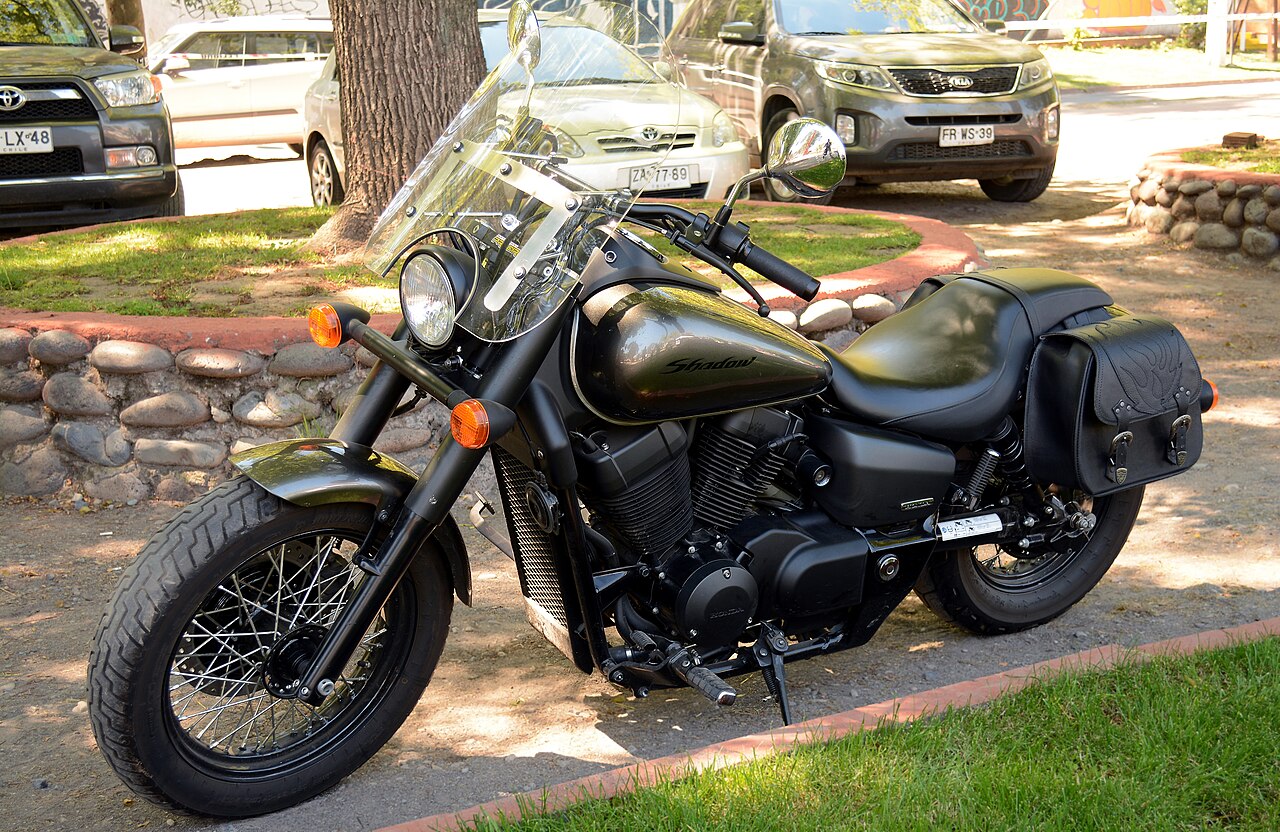
Honda Shadow photographed with a windscreen and luggage in 2017. This is a reference for the cruiser starting point, not a documented bobber conversion; the source does not establish its exact year or variant.
Honda Shadow by RL GNZLZ · CC BY-SA 2.0. Wikimedia resized version; uncropped, no editorial edits.
.jpg)
| Donor description | Supplier application to look for | What to confirm |
|---|---|---|
| Shadow 600 VLX / corresponding 400 Steed application | The supplier's 600/400 page | Exact model, market and the required original wheels/suspension |
| Shadow ACE 750 | ACE-specific components | ACE identity and original rear wheel/tire configuration |
| Shadow Aero or Phantom 750 | The supplier's Aero/Phantom application | Model year, fender mounting, lighting and equipment differences |
| Shadow Spirit 750, chain drive | Spirit chain-drive application | Final drive and exact kit part numbers |
| Shadow Spirit 750, shaft drive | Spirit shaft-drive application | Do not substitute the chain-drive kit |
| Shadow 1100 variants | The relevant 1100 application | Variant-specific dimensions; a 750 listing is insufficient |
Blue Collar Bobbers' Honda catalog separates these applications. Its FAQ explicitly says the 600 kit does not fit the 750. Record the VIN/model designation, year, market and existing modifications, and send photos when asking a supplier to confirm fitment.
Two Documented Supplier Conversion Routes
Shadow 600 VLX
Blue Collar Bobbers' 600/400 page shows its own conversion and links to a walkaround and customer photographs. It says the illustrated 600 retains the stock tank and unchanged frame, and requires stock rims and suspension for its kits. This is evidence for that supplier's configuration, not permission to assume the same result on a previously modified donor.
Shadow ACE 750
The ACE 750 page provides a separate example and component list. Its fitment statement requires stock rear tires, suspension and wheels. The page's broad year wording belongs to the ACE application; it must not be expanded to every Shadow 750. Ask for written confirmation if any of your donor's running gear has changed.
These are kit-supplier examples, not independent road tests. Follow the current instructions for the exact products and have the completed installation checked by a qualified motorcycle technician. A supplier gallery can help define the desired appearance, but it does not establish a finished build price or approval for your jurisdiction.
Compare The Factory Phantom Option
Honda's US Shadow Phantom page also provides a factory-styled alternative. The checked page lists a 2025 Phantom ABS with a 745cc V-twin, solo saddle and front/rear disc brakes. Its advertised $8,699 base MSRP plus $600 destination totals $9,299 before other applicable charges. Confirm stock and a final dealer quote.
If a solo, dark-finished cruiser already meets the goal, compare that complete-bike route with buying and repairing a donor. The current factory specification should not be copied onto an older Shadow, and a factory bobber-style model does not establish compatibility with an aftermarket conversion kit.
What The Parts Prices Cover
When checked, the Blue Collar Bobbers 600 page listed its seat kit at $492 and rear fender kit at $303–$323. Together those two listed items amount to $795–$815. That is only a parts subtotal: lighting, plate mounting, other components, shipping, tax, fitting and donor repairs are additional. A selected variant or later price change can alter it.
The supplier says it sells conversion kits rather than complete motorcycles. It also says its rear fender does not support a passenger. If carrying a passenger is a requirement, settle that before choosing this solo conversion route; adding a pad does not resolve the load-bearing design.
Use the custom motorcycle cost worksheet for the complete budget. Keep baseline repair, components, installation, finishing and handover on separate lines.
Plan The Fit, Wiring And Finish Together
| Decision | Include in the shop's scope |
|---|---|
| Seat and posture | Rider reach, mounting, travel and access to service items |
| Fender and tire | Correct kit, clearance throughout suspension movement and hardware |
| Controls | Cable/hose routing, steering lock and control operation |
| Lighting and plate | Mounts, wiring, visibility and the applicable road-use requirements |
| Finish | Preparation, paint or coating and the order of assembly |
| Completion | Inspection, adjustment, documentation and post-install support |
Have the donor assessed before removing its bodywork. Check existing frame alterations, steering, suspension, tires, brakes, fuel system and charging. A custom silhouette should not hide unresolved mechanical work. Save photographs and removed components where practical, and agree how changes will be documented.
A kit that retains the original frame and suspension is a different project from a hardtail or extensive frame redesign. Structural work needs a specialist to assess geometry, fabrication and the approval path. Do not treat a photographed hardtail as an installation recipe for a bolt-on conversion.
Find The Right Installer
Browse motorcycle builders or use a broader Honda-experience search. These are starting points, not a claim that every result builds Shadows. Ask for a completed project on your exact variant and establish whether the shop installs customer-supplied kits.
Send an editable build brief with model/year, current photos, intended riding, solo/passenger needs, exact kit links and a spending limit. Request a parts/labor breakdown and identify any work pending inspection before committing to the conversion.