
Suzuki SV650 Cafe Racer Guide: Generations, SV650X and Kits
The references listed below support the regulatory, safety, and manufacturer statements in this guide. Any dollar figure is an editorial planning estimate based on typical scope, not a quote and not taken from those references, unless a current official price is explicitly cited at that point in the text. Confirm fitment, safety, legality, availability, and current pricing for your exact vehicle before you buy or commission work.
A Suzuki SV650 cafe racer can start with an early SV650/S donor, a later standard SV650 or the factory SV650X. Choose the generation and riding position before buying a kit: a first-generation subframe package and an SV650X headlight cowl belong to different motorcycles.
The X adds factory cafe styling and lower handlebars to the later V-twin platform. A custom conversion lets you choose a different seat, bodywork and posture, but requires a complete plan for mounting, controls, wiring and finishing. This guide compares those routes, two documented custom projects and specific supplier applications.
Manufacturer, builder and supplier sources were checked September 15, 2026. Prices are dated listings, subject to confirmation; we have not installed or road-tested the referenced products. Local model years and specifications take precedence over global descriptions.
Choose Your SV650 Cafe Racer Route
| Starting point | Why consider it? | Decide before buying |
|---|---|---|
| Factory SV650X | Coordinated cowl, clip-ons and ribbed seat | Whether the low bars suit you, and whether a suitable used or remaining-stock bike exists locally |
| Standard later-generation SV650 | Upright starting position with selective cosmetic changes | Whether you actually want low bars, and which exact-year components the conversion needs |
| Earlier SV650 or SV650S | A basis for a more extensive custom body and tail | Donor condition, generation-specific parts, fabrication and the cost of bringing an older bike up to date |
Compare complete project totals. A cheaper donor with old tires, damaged bodywork, worn suspension and undocumented modifications can leave less money for the finish you want. Buying an X and immediately changing its riding position also deserves a comparison with a clean standard SV650.
SV650 Generations: Identify the Donor First
Suzuki's digital archive records these model milestones. These are introduction points, not worldwide end dates or a parts-interchange chart.
| Model milestone | Factory distinction | Meaning for a custom build |
|---|---|---|
| 1999 SV650 / SV650S | Oval-section aluminum frame; naked SV650 and half-faired S | Check early-generation seat, subframe and front-end applications |
| 2003 SV650 / SV650S | Full model change with a different, die-cast aluminum frame | Treat the chassis and bodywork as a separate fitment family |
| 2016 SV650 | Later platform with Low RPM Assist and Easy Start | Global introduction year can differ from a supplier's US model-year label |
| 2018 SV650X | Cafe-styled derivative of the 2016 platform | Identify original X equipment before pricing a replica or replacement parts |
Match the VIN, market, model designation and fitted hardware. Registration year alone is insufficient, particularly on an imported motorcycle. The SFV650/Gladius is a separate model: shared engine ancestry does not establish that a seat, cowl, exhaust or rear frame fits.
What the Factory SV650X Includes
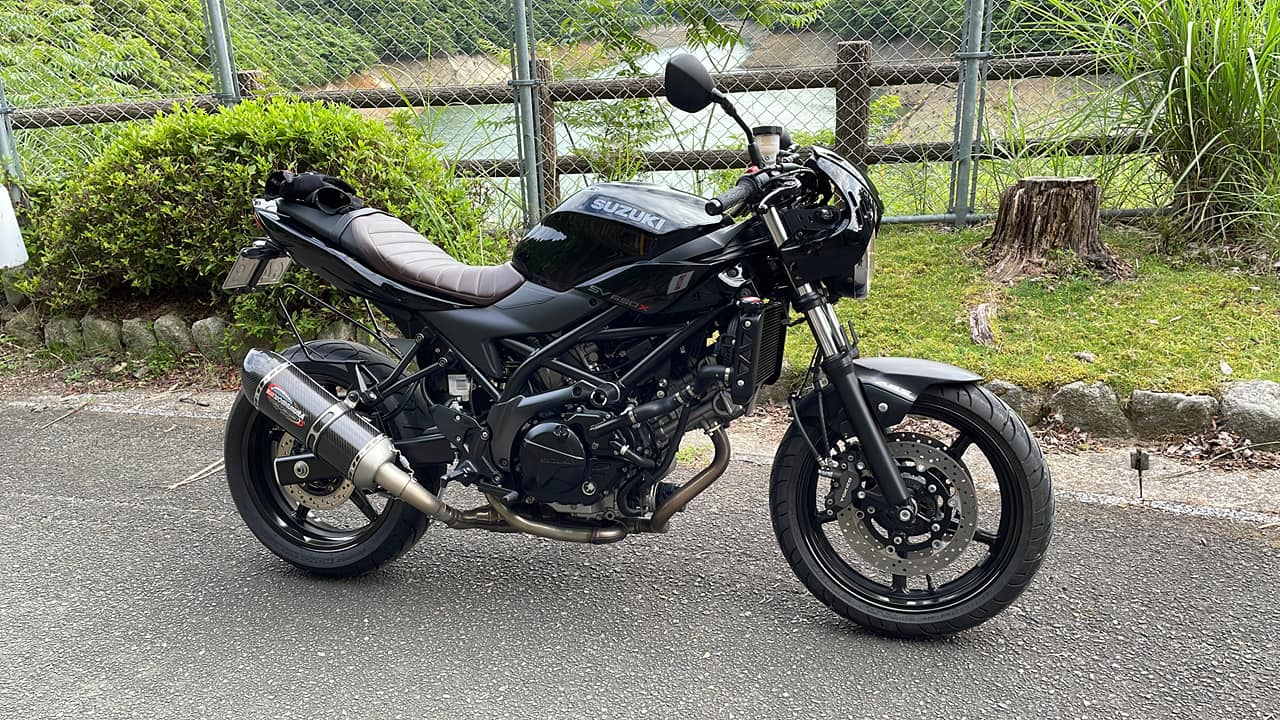
A 2021-model SV650X ABS photographed in May 2023, showing its low bars, headlight cowl and ribbed seat. This motorcycle has an aftermarket Yoshimura exhaust, so it is not an untouched factory specification. It is separate from the Purpose Built Moto and C-Racer projects below.
SV650X 2021model.jpg by Med Chaos · CC BY-SA 4.0. Original 1280 × 720 JPEG; no crop or editorial edits. This photograph remains under CC BY-SA 4.0.

The global SV650X page describes clip-on handlebars, a slotted headlight cowl and a tuck-and-roll seat. Its reference specification includes a 645 cc V-twin, six-speed gearbox, steel frame, conventional 41 mm fork, 790 mm seat height and 14.5 L fuel tank. These help explain the X's factory package; they are not a universal specification for earlier SV650s.
The lower bars are the main buying decision. Sit on the bike in normal riding gear and check wrist loading, elbow bend, knee angle, mirror view and steering lock. A low seat does not automatically make a stretched riding position comfortable. Include passenger and luggage needs in the decision.
The small cowl offers a visual reference for a cafe build, but assess wind protection on the actual motorcycle. If regular commuting is the priority, compare the X's posture with the standard bike before ordering clip-ons.
Regional specification pages also need care. Suzuki's global X page describes four-piston front calipers, while Canada's 2025 SV650XA table lists two-piston front calipers. That discrepancy does not establish which hardware is on a particular bike. Use its parts record and inspect the calipers before ordering pads, seals or an upgrade.
SV650X Availability by Market
The September 15, 2026 source check found:
Ask a seller for the actual model year, VIN, market specification, warranty start and whether the motorcycle is used, a demonstrator or unregistered remaining stock. A live product page cannot answer those questions.
Two Documented SV650 Custom Projects
Purpose Built Moto: 2006 Retro Racer
Purpose Built Moto's 2006 SV650 project shows the work behind a substantially different silhouette. The builder adapted Airtech fairings, fabricated a replacement rear subframe and built an under-tail exhaust arrangement. Its account also describes a custom battery/electrics tray, front fairing supports and a made-to-order screen.
The project credits PopBang Classics for paint, Timeless Auto Trim for the seat and Dynomite Moto for tuning. Those separate responsibilities matter when requesting a similar build: bodywork, upholstery and commissioning must all appear in the quote.
This is a commissioned retro racer with bespoke fabrication. Use its gallery to discuss proportion and workmanship; do not price it as a set of bolt-on panels or assume its details transfer to an X. The builder's performance and riding claims are not independent test results from CustomAutoMoto.
C-Racer: SV650 Street Demonstrator
C-Racer's SV650 Street project takes a different approach. The supplier describes restyling its own motorcycle while retaining its functional character, using an engine spoiler, flat-track seat, cafe headlight mask and seat cowl. Its gallery and linked components provide a reference for changing selected areas of a road bike.
Treat it as a supplier demonstrator with a mixture of styling elements. Ask which exact parts reproduce the look, what remains standard, and whether each component covers your donor and existing accessories. The project name alone is not an SV650X compatibility statement or a complete installation package.
Kit and Component Fitment Examples
The following listings were checked September 15, 2026. Each describes a different amount of work.
| Supplier example | Stated application and contents | Confirm in your quote |
|---|---|---|
| RIOT Street Racer kit, RIOT0107 | First generation, 1999–2002; seat, subframe and an assortment of lighting, cockpit, exhaust and mounting parts | Exact inventory, instructions, finish, wiring, registration requirements and installation |
| Suzuki black frame covers, 99000-990U0-003 | US listing specifies SV650 2017–2026; covers that complement a meter visor | Whether your bike is covered and which visor, brackets and other styling parts are separate |
| C-Racer SV650 Street components | Individual seat, cowl, mask and spoiler listings linked from the demonstrator | Each part's model application, supplied finish, hardware and interaction with existing parts |
RIOT displayed €1,710 for RIOT0107, and Suzuki displayed US$329.95 for the frame covers. These are separate product prices in their displayed currencies, not comparable complete conversions. Tax treatment, delivery, finishing, installation and any extra parts need written confirmation. No currency conversion or installed build total is implied.
The first-generation RIOT kit is not an SV650X kit. Its exhaust is described by the supplier as homologated; obtain the actual approval document and confirm its application in your registration market. A product description does not establish universal road approval.
For any proposed kit, request the installation instructions and a complete parts list before paying. Check whether seat mounts, instrument supports, indicators, fasteners and connectors are included. Ask whether the original rear structure is retained, replaced or cut, and who will assess the finished installation.
Inspect a Used SV650 or SV650X
Identity and Maintenance
Match the frame identification to the registration and invoices. Obtain the maintenance schedule for that exact bike and check recorded servicing against it. For US motorcycles, use NHTSA's recall lookup and ask Suzuki about older or completed campaigns; the online lookup does not show every historical repair or an international vehicle's recalls.
Age and storage matter alongside mileage. Budget for tires, fluids, battery, seals or corrosion treatment that the inspection identifies. An attractive custom finish should not substitute for a service record.
Crash Damage and Controls
Inspect bar ends, clip-ons, levers, mirrors, pegs, engine covers, radiator edges, exhaust and axles. Compare steering stops and fork position in the clamps. On an X, inspect the cowl, brackets and fasteners closely; price damaged model-specific trim before agreeing a purchase.
With the motorcycle stationary, have the controls checked through both steering locks for throttle return, hose tension, cable travel and contact with the tank or bodywork. Altered bars need more than an appearance check.
Mechanical Condition
Arrange a cold start and professional inspection where needed. Check for leaks, smoke, warning lights and poor hot restarting. Inspect wheels and bearings, fork seals, rear linkage, brakes, chain, sprockets and tire condition. Resolve unexplained noises or faults before committing the styling budget.
Modification Record
Identify the exhaust, intake, fueling device, suspension, brakes, lights, tail assembly and rearsets. Ask for receipts, installation instructions, approval records and original components. Have added wiring checked for protection and routing, and verify that service access remains possible.
Document who built an altered rear frame and how seat, passenger and suspension loads were considered. A neat photograph cannot establish weld quality, tire clearance or the suitability of the work for your intended use.
Plan Controls, Suspension and Styling Together
Riding Position Before Bodywork
Mock up the intended bars and seat before committing to a cowl or tail. A standard-to-low-bar conversion must preserve throttle return, brake-hose and cable travel, master-cylinder position and clearance through steering movement. Retaining a passenger changes the seat and tail brief.
Changing an X back to an upright position can require different clamps, bars, hoses or cables. Compare that complete job with buying a standard SV650 in the first place.
Baseline and Suspension
Start with sound tires, brakes and bearings, then set the controls and suspension for the actual rider and load. The global X specification describes spring-preload adjustment; preload is not a substitute for selecting suitable springs or fixing worn damping. Give a suspension specialist a description of the problem, rider/load information and the current settings.
Price any fork, wheel or brake conversion as a complete assembly review. Mounting a component is only part of the work: geometry, wheel alignment, braking compatibility, sensors and clearances also need assessment. Do not assume another Suzuki model's front end is interchangeable.
Exhaust, Lighting and Tail
Include exhaust mounting, heat clearance, retained emissions equipment and any necessary fueling assessment in the brief. A different silencer is not evidence of a measured power gain. Keep hot components away from the seat, wiring and body panels through suspension movement.
Check the proposed headlight aim, indicator visibility, plate location and wiring access with the actual cowl and tail fitted. Ask the installer to identify the applicable registration and inspection requirements before irreversible work. Reversible styling is easier to revise when ergonomics or practical needs change.
Prepare an SV650 Project Brief
Use the SV650 project brief to record:
Search builders listing Suzuki experience and ask for completed SV650 projects of the same generation. This is a broader Suzuki search: the current exact-model directory has no matching profiles. Read each listing's role and evidence date, then confirm that the shop handles the work you need and is accepting projects. Parts suppliers and complete-build workshops offer different services.
If your plan is mainly cosmetic, separate the paint quote using the motorcycle paint cost guide. If you are still choosing the platform, compare the XSR700 kit routes before purchasing a donor.
Sources Checked
Checked September 15, 2026. Factory history, supplier offers, custom projects and the reference photograph have different dates and purposes.